History of Temple
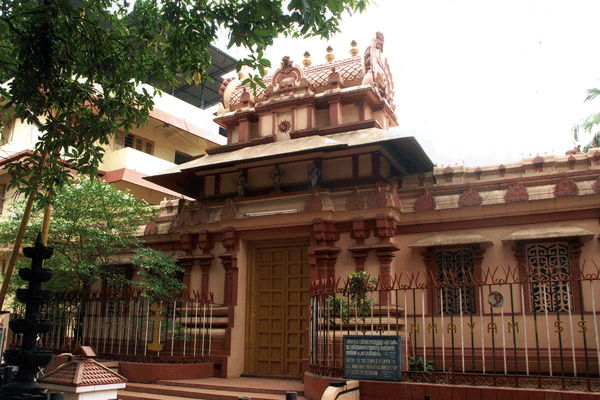
The holy temple of Sree Bhuvaneswari Devi, situated near the northern circumlocution way at the centre of Thrissur City, the cultural capital of Kerala, shines forth as the shelter giving fulfilment of all the wishes of the devotees. The principal deity of the temple is Sree Bhuvaneswari Devi, and Ganapathy and Subhramanya are installed here as upadevathas. This temple is also famous as an ancient Navagraha temple where the nine planets are installed and worshipped with proper rituals.
The idol of Sree Bhuvaneswari Devi installed in this temple, built by a Maharaj of Kochi royal family, was brought from the big palace of Thripoonithura. According to ancestors, the temple is centuries old. The rituals of worship were performed by the members of Vennattumana, at the beginning. The idols of Navagrahas which are upadevathas were also brought from the Thripoonithura Palace for installation. This temple, situated in the middle of Sree Vadakkumnatha temple and the famous Vadakkechira and known by the name ‘Bhajana Madam’ from ancient times; was obtained by Chinmaya Mission from Kochi royal family, as a gift in 1961. The temple is flourishing day by day under the permanent protection of Chinmaya Mission Trust. Devotees from all religions flock for worship to this temple which is made full of vitality by the observance of Thanthrik rituals and customs.
Sree Bhuvaneswari Devi is much present here with ‘Varsha’ and ‘Abhaya’ mudras conferring the power of destruction and blessing. By worshipping Navagrahas, the devotees get relief from the bad effects of planets. Devotees believe from their own experience that the ‘Darshan’ and different offerings of this temple will remove all their miseries and provide them peace and prosperity in life. The fact that anyone who believes in God has entry and freedom of worship may be indicated as the speciality of this temple.
Chinmayanandha
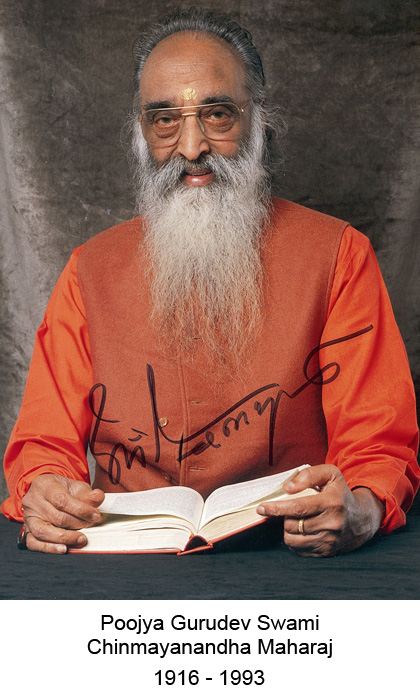
On 8 May 1916, a child was born as so many other children were born. Born to ordinary parents – a lawyer father, a home maker mother, Balan went to school like all kids do; he would later acquire a degree in English Literature, plunge into the Freedom Movement of India against British rule, be imprisoned, fall frightfully ill, be thrown out of jail for that, be rescued by a strange lady, start writing for a newspaper, make fiery speeches and plan even more fiery exposes and then, all too suddenly abandon all that, for none of them explained to him the purpose of his birth.
Clearly, Swami Chinmayananda was an unusual young man.
Balan was not born holy, yet he took sannyasa at the age of thirty-three, as, in his words, “It was the only sensible thing to do.” Tracing back to the early 1900s, this son born to the Poothampalli House in Kerala’s Ernakulam, to Vadakke Kurupath Kuttan Menon of Trichur and his wife, the devout Parukutti Menon, Poothampalli Balakrishnan Menon was the third child after two daughters. This was a traditional home steeped in worship and service of the Lord, where worship and prayer lasted longer than a slow meal. It was a home known for its kindness and hospitality, where Kulagurus Chattambi Swamigal, Yogiraj Bhairavananda and all visiting saints were revered and respected. Little did this household imagine that the baby in the crib came with a severely questioning mind, unrelenting of illogical discipline and a bank of questions whose answers lay dispersed and far into time.
In Poothampalli House, the evening poojas that at first began as a trial for an indifferent Balan would later be seen as a precursor of a fabulous life that would blaze the world with a clear idea of worship, be an idol of worship, and in later years, the idea of worship.
It was this that gave Balan the momentum towards devotion something he would not know until his mid-twenties. And like all discipline, which one instinctively follows, little Balan did too, but in the silence of his young mind he created fanciful games with the goings-on, the idols, the framed pictures, the processes and prescriptions of do’s and don’ts, as none of these added up logically in his mind.
Of the entire pantheon of gods and goddesses that lined the family prayer room, the one that held little Balan’s attention, without seeming forbidding or inhibiting, was Shiva as Gangadhara, although he did shudder to see Devi Bhagawati smothered under a mountain of flowers, a mountain that only increased with every name of the sahasranaam…As the routine established into a daily affair, Balan had to devise a coping strategy. And it was this strategy that saw the birth of the future Swami Chinmayananda. It began with a game of hide-and-seek that he played with the Lord Chandrakaladhara. So the Lord hid as Balan shut his eyes and then little Balan sought Him in his mind’s screen. Soon, this became his preferred game which he played outside of the pooja room too: to find Lord Siva in his mind on demand… and as he sought, the Lord appeared even as a sweet smile of triumph lit up little Balan’s face.